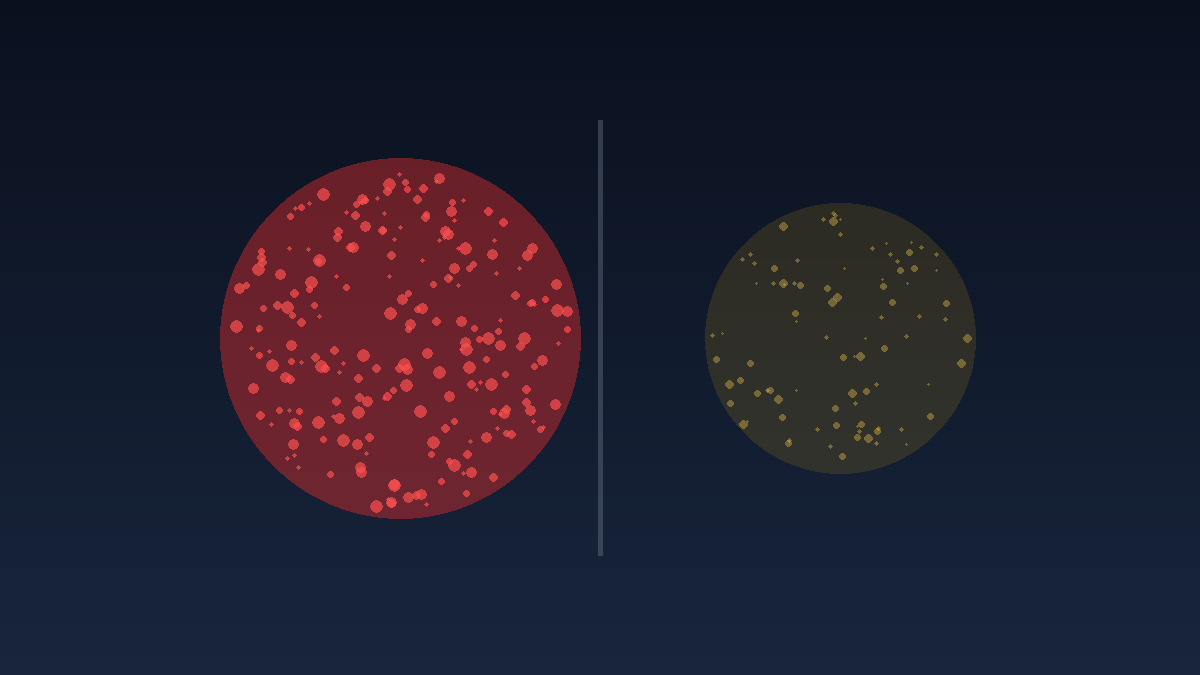
That one insult from five years ago? You still remember it.
The compliment someone gave you yesterday? You might have already forgotten it.
Someone once told you that you were not good enough, and somehow those words stayed.
But dozens of people may have told you that you were talented, hardworking, intelligent, attractive, or capable—and somehow, one negative comment still feels louder.
Why?
It isn't necessarily because you are overly sensitive.
It isn't because you are pessimistic.
And it doesn't mean something is wrong with your personality.
Your brain has a built-in tendency to pay more attention to negative information than positive information.
This psychological phenomenon is commonly known as negativity bias.
Negativity bias explains why criticism can feel heavier than praise, why embarrassing moments can replay in your mind for years, why one bad review can overshadow dozens of positive ones, and why your brain may automatically focus on what went wrong instead of what went right.
The important part is this:
You cannot completely remove negativity bias from your brain—but you can learn how to manage it.
Once you understand how negativity bias works, you can stop allowing one negative experience to define your entire perception of yourself, your relationships, your work, and your future.
Let's understand why your brain remembers insults better than compliments—and what you can do about it.
What Is Negativity Bias?
Negativity bias is the psychological tendency to give greater attention, weight, and importance to negative experiences than equally intense positive experiences.
In simple words:
Bad often feels stronger than good.
A negative comment may occupy your thoughts longer than a positive comment.
A failure may feel more significant than several successes.
One argument can change how you perceive an entire relationship.
One criticism can make you question abilities that you have spent years developing.
This doesn't mean that humans only focus on negative things. We experience happiness, gratitude, excitement, love, success, and pleasure every day.
The difference is that negative information often receives a disproportionate amount of attention from the brain.
Consider this example.
Imagine you receive 20 comments on something you created.
19 people say:
- "This is excellent."
- "I really liked this."
- "This helped me."
- "Great work."
One person says:
"This is boring."
Which comment are you most likely to remember?
For many people, it is the negative one.
That is negativity bias.
And understanding it matters because the information your brain repeatedly focuses on can eventually influence your emotions, decisions, habits, relationships, and self-image.
Why Does the Human Brain Have Negativity Bias?
At first, negativity bias seems like a design flaw.
Why would the brain give more attention to something unpleasant?
The answer is largely connected to survival.
Imagine an early human living thousands of years ago.
Two pieces of information appear:
Positive information:
"There are delicious berries here."
Negative information:
"There is a predator nearby."
Ignoring the berries might mean missing a meal.
Ignoring the predator could mean something much worse.
From a survival perspective, the cost of missing a threat was potentially much greater than the cost of missing an opportunity.
Therefore, organisms that were particularly sensitive to threats had an evolutionary advantage.
Modern humans don't usually need to worry about predators while walking to work.
But the underlying psychological mechanisms haven't disappeared.
The "predator" has simply changed.
Today, threats can include:
- Social rejection
- Criticism
- Failure
- Financial problems
- Relationship conflict
- Embarrassment
- Job insecurity
- Negative feedback
- Social comparison
- Fear of judgment
Your brain can treat these experiences as important signals that require attention.
This is one reason negative experiences can feel disproportionately powerful.
Why One Insult Can Outweigh Ten Compliments
Imagine someone tells you:
"You're really good at what you do."
You appreciate it.
Then another person says:
"Honestly, you're not that capable."
Suddenly, you start questioning yourself.
You might think:
"What if they're right?"
This happens because your brain isn't simply counting positive and negative experiences.
It is evaluating their emotional significance.
Negative information can trigger stronger emotional responses, increased attention, and deeper processing.
That's why you can receive praise from ten people and still spend your evening thinking about the one person who criticized you.
The brain essentially asks:
"Is there something here that I need to pay attention to?"
Unfortunately, this mechanism doesn't always distinguish between a genuine threat and an emotionally uncomfortable opinion.
That creates a problem in modern life.
Your brain may react to:
"You are in danger."
and
"Someone didn't like your presentation."
with very different levels of actual danger—but emotionally, both can demand attention.
Why Do We Need to Understand Negativity Bias?
Understanding negativity bias isn't about becoming unrealistically positive.
It is about becoming psychologically accurate.
If you don't understand negativity bias, you may believe your thoughts are objective representations of reality.
For example:
"Everyone thinks I'm bad at this."
But perhaps three people criticized your work while 20 people responded positively.
Your brain may be highlighting the negative information because it considers it more important.
Understanding negativity bias gives you a valuable mental pause:
"Is this actually the whole picture, or is my brain giving extra weight to the negative part?"
That question can completely change how you respond.
How Negativity Bias Impacts Your Life
Negativity bias isn't limited to emotions.
It can influence several areas of everyday life.
1. Self-Confidence
One criticism can become part of your internal dialogue.
Someone says:
"You're not good at speaking."
Years later, you may still hesitate before speaking in public.
The original comment may have lasted ten seconds.
The belief created from it can last for years.
This is why negative experiences can become connected to our identity.
Instead of:
"I performed badly."
the brain can gradually create:
"I am bad at this."
That distinction is extremely important.
An event is not an identity.
2. Relationships
Negativity bias can also affect relationships.
Imagine your partner, friend, or family member does 20 thoughtful things for you.
Then one day they say something hurtful.
Your brain may repeatedly replay the negative interaction.
You might start interpreting future behavior through the lens of that one event.
This can create a cycle:
Negative event → emotional memory → increased attention → negative interpretation → more negative memories
Over time, the relationship may feel worse than the objective pattern of interactions suggests.
This doesn't mean genuine relationship problems should be ignored.
Instead, it means you should distinguish between:
A repeated pattern of harmful behavior
and
One emotionally powerful negative event.
They are not the same.
3. Productivity
Negativity bias can quietly damage productivity.
Imagine you complete eight important tasks during the day.
But you fail to complete one task.
At night, instead of thinking:
"I accomplished eight things."
your brain focuses on:
"I didn't finish that one thing."
You go to bed feeling unproductive.
The next morning, you start with guilt rather than momentum.
This creates a dangerous productivity pattern:
Progress → ignored
Incomplete task → amplified
Eventually, you may underestimate how much progress you're actually making.
A simple solution is to track completed actions rather than only unfinished tasks.
This is one reason a structured productivity system can be useful: it creates an external record of progress that your brain's negativity bias might otherwise overlook.
4. Decision-Making
Negativity bias can influence decisions as well.
Suppose you're considering learning a new skill.
Your brain immediately produces thoughts like:
- "What if I fail?"
- "What if I'm not talented?"
- "What if people judge me?"
- "What if I waste my time?"
These possibilities receive significant attention.
Meanwhile:
- "What if I become good at it?"
- "What if this improves my career?"
- "What if I discover something I love?"
may receive less emotional weight.
The result can be risk avoidance.
You don't necessarily choose what is best.
You choose what feels safest.
5. Social Media
Social media can amplify negativity bias.
Imagine posting something online.
You receive:
500 likes
40 positive comments
3 negative comments
Which comments are you most likely to read repeatedly?
Probably the negative ones.
The problem becomes even bigger because social platforms are designed around attention.
Emotionally powerful content often captures attention more easily.
This can create a feedback loop:
Negative content → emotional reaction → more attention → algorithmic reinforcement → more negative content
Over time, your perception of reality can become distorted.
The world may appear more hostile, angry, or negative than it actually is.
The Science Behind Negativity Bias
Negativity bias isn't simply an internet psychology concept.
It has been studied extensively within psychology and neuroscience.
Researchers have found evidence that negative information can receive greater attention and produce stronger responses than comparable positive information.
One influential area of research involves the work of psychologists Paul Rozin and Edward Royzman, who discussed negativity bias across psychological phenomena.
Their work highlighted the tendency for negative events to have greater psychological impact than positive events of comparable intensity.
Another influential body of research comes from John Cacioppo and colleagues, whose work examined differences in how the brain responds to positive and negative stimuli.
Research using physiological and neurological measures has suggested that negative stimuli can produce stronger and faster responses in certain contexts.
This makes evolutionary sense.
A system that quickly notices potential threats can be protective.
However, the same system can become problematic when modern psychological threats are constantly present.
The Amygdala and Emotional Threat Detection
The amygdala is a brain structure strongly associated with emotional processing, particularly the detection and evaluation of emotionally significant information.
It is often discussed in relation to fear and threat detection.
But the amygdala is not simply a "fear center."
It participates in a broader network involved in identifying emotionally relevant information.
When something feels threatening, socially significant, or emotionally intense, the brain can prioritize it.
This helps explain why emotionally charged experiences can become especially memorable.
For example:
Someone casually says:
"Nice shirt."
You acknowledge it and continue your day.
Someone says:
"You look ridiculous."
You may replay the sentence later.
The second statement carries greater emotional threat.
Therefore, your brain treats it as more important information.
Why Negative Memories Can Feel So Vivid
Another important concept is emotional memory.
Emotionally intense experiences can become strongly associated with memory.
Think about an embarrassing moment from school.
You may remember:
- Where you were
- Who was present
- What someone said
- How you felt
- What happened next
The details may still feel vivid today.
You might not remember what you ate for lunch that week, but you remember the embarrassment clearly.
How to Give Your Brain More Positive Experiences
If the brain naturally gives additional weight to negative experiences, positive experiences sometimes need deliberate attention.
Try this simple practice:
Notice → Pause → Absorb → Remember
Notice
Identify something positive.
Pause
Don't immediately move on.
Absorb
Spend 10–20 seconds actually experiencing it.
Remember
Connect it to your sense of progress.
For example:
You finish a difficult project.
Don't immediately open another task.
Pause.
Think:
"I finished something that was difficult."
Allow yourself to experience satisfaction.
This may seem insignificant.
But repeatedly acknowledging progress can help prevent your brain from treating success as invisible.
Why You Shouldn't Try to Become "Positive All the Time"
There is another trap.
After learning about negativity bias, some people attempt to eliminate every negative thought.
That isn't the goal.
Negative emotions have functions.
Fear can protect you.
Guilt can highlight mistakes.
Sadness can signal loss.
Anger can indicate that something feels unfair.
Anxiety can sometimes alert you to uncertainty.
The problem isn't the existence of negative emotions.
The problem is when they become disproportionate, repetitive, or disconnected from useful action.
Healthy psychology isn't:
"Think positive."
It is:
"Think completely."
See the negative.
See the positive.
See the neutral.
Then respond based on the full picture.
The 80/20 Rule of Emotional Attention
You don't need to give every experience equal attention.
Some negative experiences genuinely deserve more attention.
But you should become aware of disproportionate attention.
Ask:
"Is this event receiving 90% of my mental energy even though it represents only 10% of what happened?"
For example:
You have a productive week.
Then one meeting goes badly.
If you spend the entire weekend thinking about that meeting, your emotional attention has become disconnected from the overall evidence.
The solution isn't to pretend the meeting didn't happen.
Learn from it.
Then return your attention to the complete picture. If you want to apply the same idea to your time and priorities, our guide to the Pareto Principle and the 80/20 Rule explains how a small number of inputs often produce most of the results.
What Negativity Bias Teaches Us About Personal Growth
One of the biggest lessons is surprisingly simple:
Your brain isn't a neutral narrator.
It interprets.
It filters.
It prioritizes.
It remembers.
And sometimes it gives negative information more psychological weight than it deserves.
That means personal growth isn't simply about changing your circumstances.
It is also about understanding how your mind processes those circumstances.
You can have a successful life and still feel like you're failing if your brain constantly highlights what is missing.
You can have supportive relationships and still feel rejected if you focus exclusively on criticism.
You can make enormous progress and still feel stagnant if you only remember your mistakes.
Your external reality matters.
But your attention determines which parts of that reality become psychologically dominant. This is one reason understanding concepts like the Dunning-Kruger effect can help: accurate self-awareness depends on seeing the whole picture, not just the loudest evidence.
The Bottom Line
Your brain has a survival-oriented tendency to notice what could go wrong.
That's why one insult can stay in your memory for years.
Why one failure can overshadow several successes.
Why criticism can feel heavier than praise.
Why embarrassing moments can replay at midnight.
And why your brain sometimes notices everything that went wrong while ignoring everything that went right.
This is negativity bias.
But understanding it gives you an important advantage.
You don't have to believe every negative thought.
You don't have to treat every criticism as truth.
You don't have to let one failure become your identity.
And you don't have to ignore negative information either.
Instead, learn to process it proportionately.
Ask:
What actually happened?
What am I interpreting?
What can I learn?
What positive information am I ignoring?
What should I do next?
Your brain may naturally look for the threat.
Your job is to look at the whole picture.
Because sometimes the biggest problem isn't that something went wrong.
It's that your brain remembers the one thing that went wrong—and forgets everything that went right.
Key Takeaway
Negativity bias makes negative experiences feel louder, but awareness can stop them from becoming the entire story.
The goal isn't to silence your negative thoughts.
The goal is to stop giving them the microphone all day.
Frequently Asked Questions
Why do I remember insults more than compliments?
Because your brain gives negative information greater attention and emotional processing than positive information of similar intensity. This tendency is known as negativity bias.
Is negativity bias normal?
Yes. It is a common feature of human psychology and likely evolved as a survival mechanism, because noticing a potential threat was far more important than noticing an opportunity.
Why does criticism hurt more than praise?
Criticism can feel like a social threat, and your brain treats threats as more important. Praise is pleasant but usually less urgent, so it often receives less emotional weight.
Can negativity bias be eliminated?
It cannot be switched off completely, but you can reduce its influence. Separating facts from interpretations, tracking your wins, savoring positive experiences, and processing criticism proportionately all help.
Why do embarrassing memories stay for years?
Emotionally intense experiences are encoded more strongly in memory. Your brain flags them as important, so they stay vivid and easy to recall long after the event.
How does negativity bias affect relationships?
One hurtful interaction can dominate your memory and shape how you interpret everything else. Distinguishing between a repeated pattern of harm and a single emotionally powerful event keeps your view of the relationship accurate.
Does social media increase negativity bias?
Yes. Platforms are designed around attention, and emotionally charged content attracts the most attention, creating a loop that can make the world look more hostile than it really is.
How can I stop overthinking negative comments?
Treat a comment as data, not a verdict. Separate fact from interpretation, ask whether it contains useful information, and if there is nothing actionable, deliberately redirect your attention.
Comments
Share your thoughts — I read every single one.