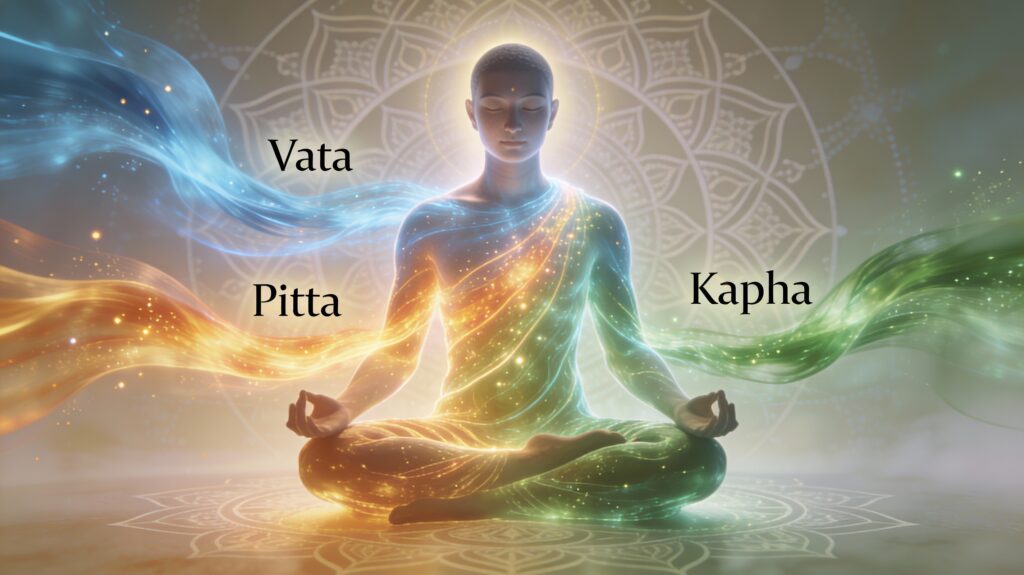
🌟 Introduction: When Your Doshas Speak, Your Body Listens
Have you noticed how:
- some days your thoughts race uncontrollably,
- some days irritation and heat rise quickly,
- and other days you feel heavy, slow, or unmotivated?
Ayurveda teaches that this is not random —
it is the language of your doshas.
The three fundamental energies of the body — Vata, Pitta, and Kapha — govern your:
- digestion
- emotions
- immunity
- sleep
- energy levels
- mental clarity
When these doshas fall out of balance, discomfort and disease appear.
When they return to harmony, the body naturally heals.
Ayurveda calls this state Swastha — being established in your true self.
🌿 Ayurveda: The Ancient Blueprint of Human Nature
Ayurveda, meaning “the Science of Life,” originated in India more than 5,000 years ago.
Its core wisdom is simple yet profound:
Every human being is a unique combination of three doshas.
The Three Doshas
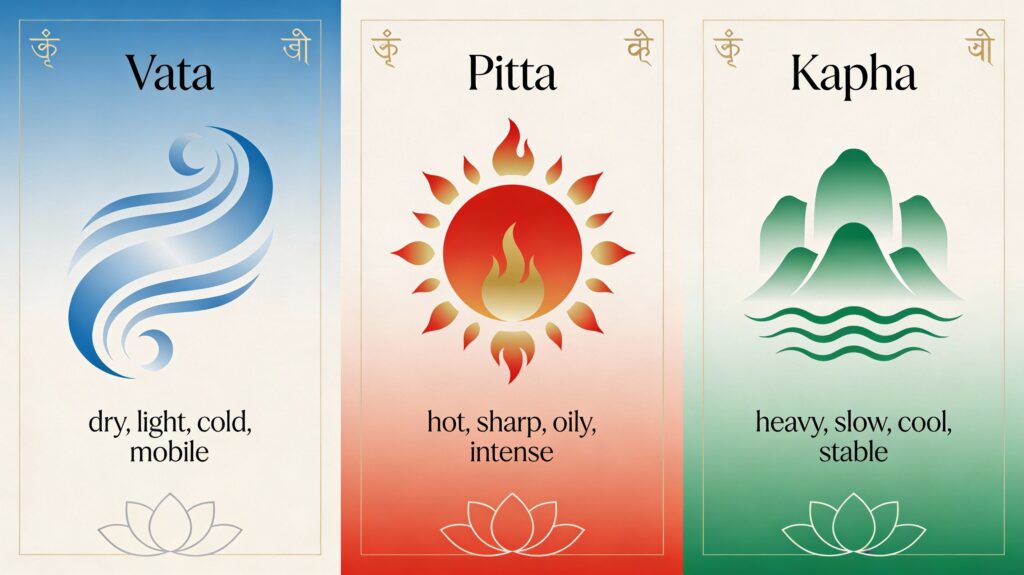
- 🌀 Vata – Air + Space (movement)
- 🔥 Pitta – Fire + Water (transformation)
- 🌱 Kapha – Earth + Water (structure & stability)
Each person carries all three, but in different proportions — like an energetic fingerprint.
Health is not about eliminating a dosha.
Health is about balance.
🧠 Ayurveda Meets Modern Science
While doshas are energetic principles, modern science increasingly validates their effects.
Ayurvedic concepts align with:
- gut–brain axis research
- stress physiology
- inflammation pathways
- circadian rhythm science
- psychosomatic medicine
Studies show that:
- stress regulation improves digestion (Vata–Pitta link)
- cooling practices reduce inflammation (Pitta balance)
- movement and light diet improve metabolism (Kapha balance)
Ancient wisdom is now meeting modern evidence.
🌿 Understanding the Three Doshas
🌀 Vata Dosha — The Energy of Movement
Elements: Air + Space
Qualities: Dry, cold, light, mobile
Governs: Nervous system, breath, circulation, creativity, elimination
When Vata Is Balanced
- Creative and alert
- Calm yet enthusiastic
- Flexible and joyful
When Vata Is Imbalanced
- Anxiety and fear
- Insomnia
- Dry skin and digestion
- Overthinking
- Irregular routines
How to Balance Vata
Key principle: Warmth, stability, nourishment
- Warm cooked meals, ghee, root vegetables
- Consistent daily routine
- Abhyanga (oil massage)
- Gentle yoga & grounding meditation
Affirmation:
“I am grounded, calm, and supported.”
🔥 Pitta Dosha — The Energy of Transformation
Elements: Fire + Water
Qualities: Hot, sharp, intense
Governs: Digestion, metabolism, intelligence, ambition
When Pitta Is Balanced
- Focused and confident
- Strong digestion
- Natural leadership
When Pitta Is Imbalanced
- Anger and irritability
- Acid reflux, skin issues
- Burnout and perfectionism
How to Balance Pitta
Key principle: Cooling, moderation, compassion
- Cooling foods, coconut water, greens
- Avoid excess spice, heat, and competition
- Moon salutations, swimming, nature walks
- Compassion and forgiveness practices
Affirmation:
“I am calm, patient, and balanced.”
🌱 Kapha Dosha — The Energy of Stability
Elements: Earth + Water
Qualities: Heavy, slow, cool
Governs: Immunity, strength, emotional stability
When Kapha Is Balanced
- Loving and patient
- Strong immunity
- Grounded and supportive
When Kapha Is Imbalanced
- Weight gain
- Lethargy and depression
- Congestion and attachment
How to Balance Kapha
Key principle: Lightness, stimulation, movement
- Light, warm meals with spices
- Dynamic exercise and sweating
- Early rising and decluttering
- Motivational practices
Affirmation:
“I am energized, motivated, and free.”
Daily Frameworks for Dosha Balance
🌿 1. Dinacharya (Ayurvedic Daily Routine)
- Morning cleansing and meditation
- Main meal at midday
- Light dinner before sunset
- Digital detox in the evening
🌿 2. The 3-Step Dosha Healing Method
- Awareness of imbalance
- Opposite healing principles
- Consistency for 21 days
🌿 3. Mind–Body–Spirit Integration
- Mind: Meditation, breathwork
- Body: Diet, sleep, movement
- Spirit: Purpose, gratitude, compassion
🍲 Diet Principle for Dosha Balance
“Eat according to imbalance, not identity.”
- Vata → warm & grounding
- Pitta → cooling & soothing
- Kapha → light & stimulating
🧘 Spiritual Practices for Dosha Alignment
- Mantras: LAM (Vata), SHAM (Pitta), VAM (Kapha)
- Breathwork: Ujjayi, Sheetali, Kapalbhati
- Meditation: Grounding, compassion, energizing
🌟 Conclusion:
Your doshas are your inner universe. When they align, life flows. Every conscious breath, every nourishing meal, every mindful habit moves you closer to wholeness.
Balance is not perfection — it is awareness.
Frequently Asked Questions
What are the three doshas?
In Ayurveda the three doshas are vata, pitta, and kapha, described as fundamental energy patterns believed to govern bodily functions.
How do I find my dosha?
Prakriti, your baseline nature, is assessed through the traits you have had since birth, while vikriti describes your current state. A qualified practitioner can assess both.
What are the signs of a vata imbalance?
Vata imbalance is traditionally linked to dryness, anxiety, irregular digestion, poor sleep, and scattered thinking.
How does imbalance show in pitta and kapha?
Pitta imbalance is linked to heat, inflammation, acidity, and irritability, while kapha imbalance is linked to sluggishness, congestion, weight gain, and low motivation.
Can diet balance the doshas?
Ayurveda recommends warm, grounding foods for vata, cooling foods for pitta, and light, stimulating foods for kapha, along with consistent routines.
Comments
Share your thoughts — I read every single one.