
Introduction:
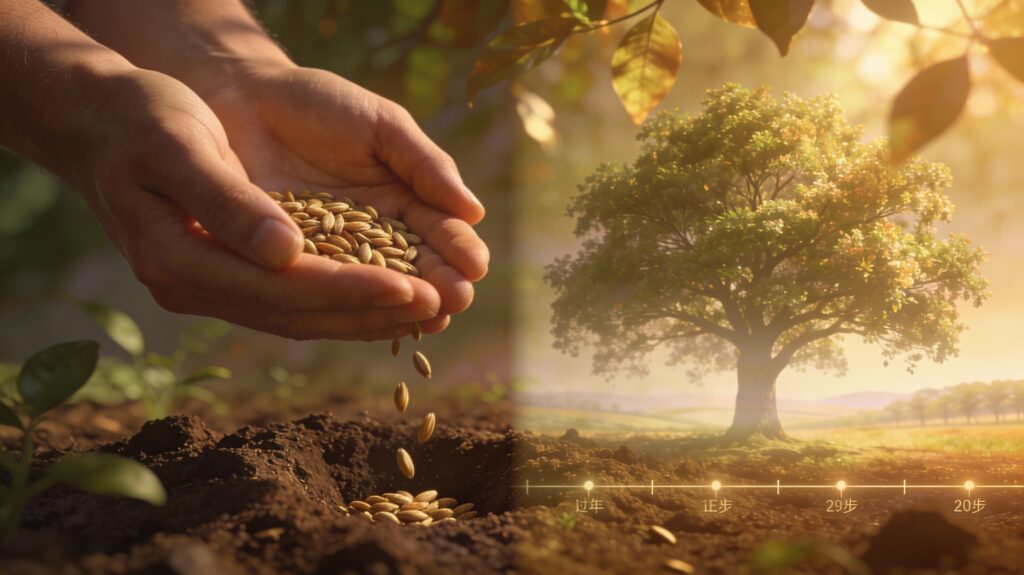
Imagine planting a seed today — of kindness, integrity, love, or honest effort. Years later, that seed grows into a tree — not just for you, but one that offers shade and fruit to generations after you.
What if this ancient idea — that our actions echo across time — holds the key not only to spiritual growth, but also to practical success, happiness, and inner peace in modern life?
In a world driven by instant gratification, fading relationships, unpaid debts, and visible injustice, the idea that “what goes around comes around” can sound naive or overly spiritual. Yet across civilizations, cultures, and millennia, one belief has endured:
Actions matter — not only now, but far into the future.
This belief is known as the Law of Karma.
Whether you view karma as cosmic justice, ethical cause-and-effect, or a psychological life compass, understanding it deeply reveals how we shape our future through present choices — and how we can consciously create a better life.
What Is Karma? Meaning, Definition & Spiritual Roots
Origin of the Word “Karma”
The word karma comes from the Sanskrit term “karman,” meaning “action.” Originally, karma referred to ritual or sacrificial actions in ancient Indian traditions. Over time, especially through texts like the Upanishads, it evolved into a moral and ethical principle.
“A person becomes good by good action, and bad by bad action.”
In simple terms, karma is often summarized as:
“What you sow is what you reap.”
Good actions (punya) tend to bring positive outcomes, while harmful actions (paapa) lead to suffering.
Karma Is More Than Just Physical Action
A deeper spiritual understanding teaches that karma operates on three levels:
1. Action (Body)
Your visible deeds, behavior, and conduct.
2. Speech (Words)
What you say — whether your words heal or harm, uplift or destroy.
3. Thought & Intention (Mind)
Your inner motivations, emotions, and mental energy.
This means karma is not just about what you do, but why you do it. Two people may perform the same action, yet create very different karmic outcomes based on intention.
Karma Is Not Divine Punishment — It Is Moral Causation
One of the most misunderstood ideas about karma is that it involves a divine judge rewarding or punishing humans. Traditional philosophies suggest otherwise.
Karma functions like a natural law of cause and effect:
Actions generate energetic impressions and These impressions influence future experiences and no external judge is required
Some traditions believe karmic residue can persist across lifetimes, shaping circumstances of birth, relationships, challenges, and opportunities.
Why the Law of Karma Still Resonates Today
Despite being ancient, karma remains deeply relevant in modern life.
Inner Accountability & Moral Compass
Karma reminds us that even unseen thoughts and intentions matter. It encourages mindfulness, integrity, honesty, and compassion.
Life as Interconnected Energy
The karmic view promotes responsibility instead of randomness. Life isn’t chaos — it’s interconnected action and consequence.
Meaning Beyond Success or Failure
Karma offers context to suffering and success, helping people find meaning even during hardship.
Spiritual Liberation
In Hinduism, Buddhism, and Jainism, karma is tied to liberation (moksha or nirvana) — freedom from repetitive suffering through purified action and awareness.
Karma in the Modern World: Psychological & Social Evidence
Modern research supports the idea that belief in karma influences behavior and well-being.
Key Research Insights:
- People who believe in karma tend to think long-term rather than seeking instant gratification.
- Karma belief strengthens ethical decision-making and professional integrity.
- Strong karmic belief correlates with higher life satisfaction, emotional stability, and psychological well-being.
- Thinking in karmic terms increases generosity, compassion, and sustainable behavior.
But There’s a Warning when misunderstood, karma can:
- Encourage victim-blaming
- Justify social inequality
- Promote passivity or fatalism
- Karma becomes harmful when used as a simplistic explanation for all suffering, instead of a tool for growth and responsibility.
The “Karma Loop”: When Belief Turns Into a Trap
Many people get stuck in what can be called a karma loop:
- Suffering occurs
- It’s blamed on “past life karma”
- No responsibility or action is taken
- Passivity increases
- Suffering continues
- This creates stagnation instead of growth.
- Karma should empower action, not replace it.
Breaking the Loop: A Modern, Balanced Karma Framework
Awareness & Mindfulness
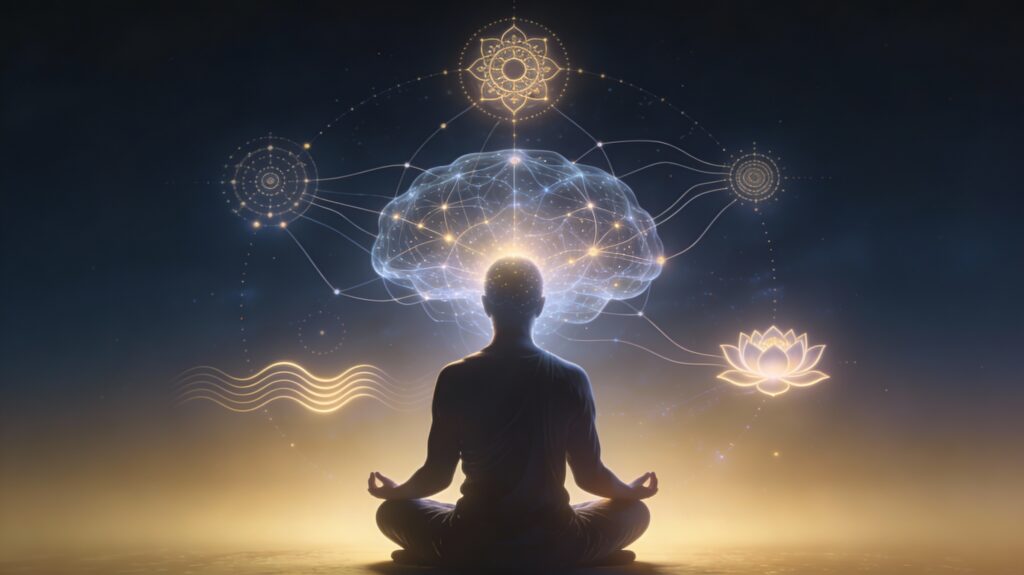
Observe your actions, words, and intentions daily. Meditation and reflection help prevent unconscious reactions.
Long-Term Thinking
Treat life like compound interest: Small habits of honesty, discipline, and kindness accumulate over time.
Karma as Feedback, Not Punishment
If something goes wrong, ask:
“What can I change now?”
Not:
“What did I do wrong in a past life?”
Ethical Living & Professional Integrity
Karma supports sustainable success — reputation, trust, and inner confidence.
Emotional & Mental Well-being
Karma provides meaning, helping people cope with uncertainty and hardship.
Conscious Karma & Transformation
Forgiveness, awareness, and compassionate action can transform negative patterns. Karma is dynamic, not destiny.
Practical Daily Habits to Live Karma
- Daily self-reflection or journaling
- Mindful communication
- Compassionate service without expectation
- Honest, consistent work ethic
- Meditation and inner awareness
- Forgiveness and learning from mistakes
- Empathy instead of judgment
- A Modern Interpretation of Karma
- Karma doesn’t have to be mystical.
It can simply mean:
Your actions shape your habits. Your habits shape your character. Your character shapes your life.
Seen this way, karma becomes a practical philosophy for conscious living.
Conclusion: What You Sow Today Becomes Your Tomorrow
The Law of Karma — understood not as superstition, but as responsible action and conscious living — offers profound guidance for modern life.
Every thought, word, and deed is a seed.
Plant wisely. Nurture patiently. Act consciously.
Because what you sow today doesn’t just shape tomorrow — it shapes who you become. 🌱✨
Leave a Reply